Welcome to the Salins Orthodontics Blog! We hope that you enjoy our posts and maybe even learn a little bit about...well...everything! We will explore the world of orthodontics, tell fun and interesting stories and share a bit of our fun personality. Please feel free to interact, ask questions, make comments and share your insight!
Showing posts with label san bruno. Show all posts

Friday, January 23, 2015

How to Care for Your Invisalign® Aligners

Is it possible to straighten the teeth without braces? Yes, it is. Welcome to the world of Invisalign aligners. Invisalign aligners are made from a clear, thermoplastic material that is custom made to fit your teeth. Unlike conventional braces, Invisalign aligners are removable. More importantly, the clear thermoplastic material makes the aligners invisible, which is ideal if the thought of metal braces and elastics make you self-conscious. For the best results, proper handling and care of your Invisalign aligners is important. Follow these steps to take care of your aligners:
1. Do not eat or drink hot beverages while wearing aligners. It’s a good idea to get in the practice of removing the aligners before eating and drinking. Because the aligners are made of plastic resin, heat can distort and damage them. Also, eating while wearing the aligners will cause sugar and other food particles to stay on your teeth, which contributes to plaque and tooth decay.
2. Clean the aligner trays regularly. Invisalign aligners are exposed to the same bacteria and plaque that your mouth is, so you need to clean them as regularly as you clean your teeth. However, avoid cleaning the aligners with harsh chemicals. We recommend using a cleaning kit or some other type of specific solution. When it comes to cleaning Invisalign aligners, carefully follow the instructions given by Dr. Sheldon Salins.
3. Store aligners in a cool, dry, safe place. When you’re not wearing the aligners, store them in the case provided by our office. If you don’t use the case, they can easily be lost. Keeping them out of reach of small children and pets is also a good idea. The last thing you want is for Fido to think your Invisalign aligners are chew toys.
4. Don’t chew gum while wearing aligners. There’s one thing that conventional braces and Invisalign aligners have in common: chewing gum damages both of them.
5. Don’t soak aligners in mouthwash. Many popular mouthwashes contain a color pigment. It’s possible that soaking Invisalign aligners in mouthwash will tint or stain them.
For more tips and tricks for a successful Invisalign experience, contact our South San Francisco & Union City, CA offices!

Thursday, September 12, 2013

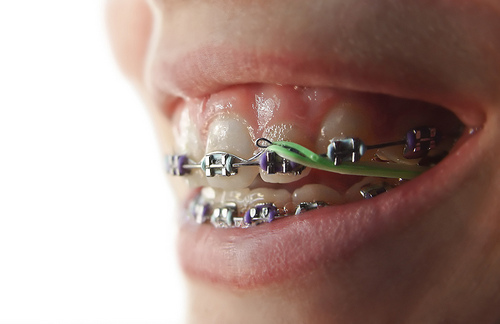
Do I really need to wear my rubber bands with my braces?

Most of our patients at the office of Dr. Sheldon Salins. will need to wear rubber bands at some point during their orthodontic treatment. The main reason our patients are instructed to wear rubber bands is to correct their bite. If your teeth do not fit together properly, Dr. Sheldon salins will recommend that rubber bands be used. Dr. Sheldon Salins may also recommend using rubber bands to close or open spaces.
Rubber bands are a critical part of your treatment, and wearing them as Dr. Salins and our team recommend will help move your teeth into the desired position. Dr. Sheldon Salins may ask you to wear your rubber bands full time, meaning that they should only be taken out when you brush and floss your teeth three times a day. Other times, you may be asked to only wear them part-time, like only during the day or only during sleep.
If you still have any questions about orthodontic rubber bands, we invite you to give us a call or ask us during your next adjustment appointment. Remember, wearing rubber bands as prescribed by Dr. Sheldon Salins is an important step during your treatment, and can reduce the time you have your braces. If you lose your rubber bands or run out, stop by our South San Francisco & Union City, CA office and pick up more!

Friday, April 6, 2012

Easter and Candy – What to Avoid!


For those who celebrate Easter, you know that your children are probably expecting baskets full of that brightly packaged, sugar covered candy. For months I have seen entire aisles of grocery stores become completely devoted to the Easter candy that so many of our country’s youth love. The pastel candy shells, those hollow chocolate bunnies, and the stickiness of those caramel eggs. They may taste great, but the damage it can do to your teeth or braces can land you a visit to your local orthodontist!
 

What Not to Eat

Most of us love candy, but when you have your braces put on for the first time, your orthodontist typically informs you of the foods you should be avoiding. This Easter, if you absolutely must eat candy, avoid biting down on hard candy. They can easily bend wires and break the metal brackets clean off of your tooth. This will land you back in the orthodontist where the bracket will be reapplied and can even lengthen the amount of time you will need to wear your braces.

Caramels and other sticky candy can also break brackets. Even more so, it can easy get between the brackets and wires which can eventually lead to cavities. Have a cavity filled while you are wearingbraces is no fun.

Immediately after you eat any candy, I encourage you to brush your teeth and floss. This minimizes the risk of cavities and keeps your orthodontist happy. Also when you eat candy, it is better to eat a certain amount at once rather than eating it in small quantities throughout the day. This way, when you brush your teeth you are flushing out all of the sugar rather than leaving traces of it behind. That is, unless you want to brush your teeth every time you eat a single piece of candy.

After the Easter holiday, stop by Salins Ortho for a checkup so you can avoid any complications from those sweet treats!

Thursday, March 29, 2012

Smiles of the Rich and Famous


I saw this article online at www.zeel.com and thought it really hit home for adults considering orthodontics, 

 Posted on: June 21, 2011
By: StacyAtZeel
http://www.zeel.com/g/smiles-of-the-rich-famous-celebrity-braces/2011/06/21
Longing for a Hollywood smile? Eva Longoria did too. In the July issue of InStyle magazine, the Cristiada leading lady reveals that she is currently sporting, yes, braces to realign her bottom teeth.
Let’s get one thing straight. The 36-year-old actress isn’t the only celebrity to seek an improved smile through orthodontics. For many adults, the only thing more embarrassing than a dreaded tin grin is a mouthful of crooked teeth, so it’s no wonder that one in every five orthodontic patients has long since graduated from wearing a training bra.
The beauty of present day orthodontics is that there are many ways to straighten your smile. Crowded, gapped and overlapping teeth can be perfected with traditional metal braces or with less noticeable clear brackets. For adults who prefer a more concealed style, lingual braces can be fastened to the backs of the teeth. And for those who want to avoid tooth attachments altogether, Invisalign—removable bite trays that shift the teeth into place—can be a practical solution.
Which treatment is right for you? Take a cue from these beaming celebrities who turned to adult orthodontia to enhance their headshots.
Tom Cruise, Age 39
While taking his kids to the orthodontist, silver screen icon Tom Cruise decided to fix his already dashing smile after discovering that his front teeth were not perfectly centered. Cruise opted for invisible braces, though he removed the orthodontia while filming.
Zeel Expert and New York City orthodontist Elisa Mello appeared on Inside Edition to discuss the actor’s dental treatment (you can watch the video here). Mello estimated that Cruise would need to wear the studs for 12 to 18 months.
Katherine Heigl, Age 28
Katherine Heigl never really wanted to fix her “wonky” teeth, that is, until she got engaged. “I want my teeth straight for my wedding photos,” the blonde beauty said in an interview with E! Online. Heigl chose to wear an Invisalign retainer, which she dubbed “Netflix for your teeth.”
Gwen Stefani, Age 30
Fashion icon and former rock-star Gwen Stefani donned full-blown metal braces on both her top and bottom rows of teeth. No doubt, they were as quirky an accessory as her magenta locks and too-short bangs. Still, she managed to nab herself a husband at the time.
Holly Willoughby, Age 30
A growing baby bump isn’t the only physical change this British anchorwoman and model is publicizing these days. “Brace yourselves, I’ve got braces…eek!” Willoughby tweeted earlier this month. The This Morningtelevision presenter chose barely-there clear brackets connected with a thin white wire.
Cher, Age 30s
Ok, so it was a long time ago. But music legend Cher did in fact wear braces as an adult. Cher observed her teeth shifting while at the dentist for a routine cleaning, and had the braces applied soon after. (Too bad Invisalign wasn’t invented yet.)

Monday, March 19, 2012

Are you wearing a mouthguard?


Wouldn’t you believe it, it’s amost springtime! The spring months, however, bring an increase in outdoor activities and a greater chance of kids damaging their precious mouths and pearly whites. If you play sports, it’s important that you consult Dr. Salins for special precautions, such as wearing a mouth guard. A protective mouth guard is advised for playing spring sports such as baseball, soccer, lacrosse and others. Be sure, however, to avoid mouth guards that custom form to your teeth as these will resist any tooth movements we are trying to achieve.
In case of any accident involving the face, check your mouth and the appliances immediately. If teeth are loosened or the appliances damaged, please schedule an appointment with Dr. Salins. And don’t forget to ask us—  Dr. Salins will provide a mouth guard for any patient in active treatment.
Only by using a mouth guard and other forms of facial protection can kids with and without braces avoid serious sports injuries. Please give us a call if you have any questions about mouth guards or your treatment with  Dr. Salins.

Friday, March 2, 2012

Adjusting to life with braces, from Dr. Salins


When you get braces at Salins Orthodontics there are a few things you’ll have to adjust to get optimal results in the shortest amount of time. If you have any questions about the “do’s and don’ts” of living with braces, feel free to ask Dr. Sheldon Salins or any member of our staff during your next adjustment!
Eating
When you have braces, there are a few types of food that can damage your brackets and bend your wires, leading to more appointments and longer treatment times. By simply avoiding sticky, chewy, crunchy, and hard foods, as well as foods that require biting into like corn on the cob, your orthodontic experience will be much easier.
Cleaning
You’ll never believe the amount of food that can get stuck between your braces when you eat. In addition to causing bad breath and tooth decay, it looks pretty gross, too. It’s so important to brush your teeth after every meal and floss every day, and even though it’s kind of a hassle, it’ll all be worth it in the end.
Sports
Protecting your smile if you play sports is essential when you have braces. Mouth guards help protect your teeth and gums from injury. Dr. Salins can provide a mouth guard for you if you plan on participating in any kind of contact sport!

Saturday, June 19, 2010

Top ten tips for keeping your braces, and teeth clean!


Keeping your teeth clean is more important than ever when you have braces. Food bits have more spots than usual to hide in your mouth, so you must be diligent in order to avoid bad breath, swollen gums, discolored teeth and cavities. If you remove plaque regularly during treatment, you'll experience better results and shorter treatment time. Keep plaque at bay with these top ten tips:

1. One tooth at a time. When you brush, take time with each individual tooth – at least 10 seconds each – and pay careful attention to the spots where your teeth touch your braces.

2. It’s all about the angles. Brush the tops of your teeth and braces with your brush angled down toward where they meet. Brush the bottoms of your teeth and braces with your brush angled up.

3. The tooth, the whole tooth, nothing but the tooth. While the front surface of your teeth may seem like the most logical to clean, it’s equally important to clean the inner surface of your teeth (tongue side) as well as the chewing surface. And be sure to clean along your gum line – a key spot for plaque buildup.

4. Step 1: eat, step 2: clean. While you’re in treatment, it’s important to brush after every meal. Bits of food can easily get caught between braces and teeth, and these food bits interact with bacteria in your mouth to cause decay. The longer food is in contact with your teeth, the greater opportunity for plaque to form. If you are eating somewhere that you can’t brush, thoroughly rinse your mouth with water.

5. Like a Boy Scout, always be prepared. The easiest way to be sure you can brush after every meal is to get in the habit of taking a toothbrush, toothpaste and floss with you wherever you go. Designate a special container just for your teeth-cleaning tools and keep it in your purse, backpack, or laptop case.

6. Remove the moving parts. If you have elastic bands or headgear, remove these parts before you brush or floss.

7. Fluoride is your friend. Fluoride helps prevent cavities. Be sure to brush with fluoride toothpaste, and rinse with fluoride mouthwash.

8. Pointy brushes reach tiny places. Interproximal brushes (sometimes called proxa brushes or interdental brushes) are cone-shaped and come in very handy for reaching spots around your braces that standard brushes can’t.

9. Find the floss for you. Regular floss works for some patients, but others find it easier to work with a floss threader, which helps you get the floss into tight places. Other patients like an all-in-one product called Superfloss, which comes with a stiff end for easy threading, a spongy section for cleaning wide spaces, and regular floss for narrow spaces.

10. Make time for the pros. It’s your job to take care of the everyday cleaning. But make sure to visit your dentist regularly while in treatment, to get the deep, thorough cleaning that only a professional can provide. If you need help finding the right dentist for you, feel free to contact our office - we’d love to help!

Hope this helps!

Thursday, April 29, 2010

Ask Dr. Salins: What, exactly, is malocclusion?


Malocclusion, or what Dr. Salins call “bad bite,” is the improper alignment of teeth and/or jaws. When your teeth and jaws are not properly aligned, it may impact your bite, the ability to properly care for your teeth, your gum tissue health and, yes, even your appearance.

Dr. Salins will tell you that untreated malocclusion can lead undesirable mouth problems, including tooth decay, gum disease, or chipped and cracked teeth. The most common solution for malocclusion, of course, is orthodontic treatment. The actual course of treatment, including the length of time you will require braces, will be determined by severity of your malocclusion. The goal of your treatment is to move your teeth into the proper position and correct any misalignment in the jaw.

At Salins Orthodontics, we use the most advanced technology in the field in order to ensure that you receive the best possible results. If you have any questions about malocclusion, please give us a call and we’ll try to answer any questions you may have.